

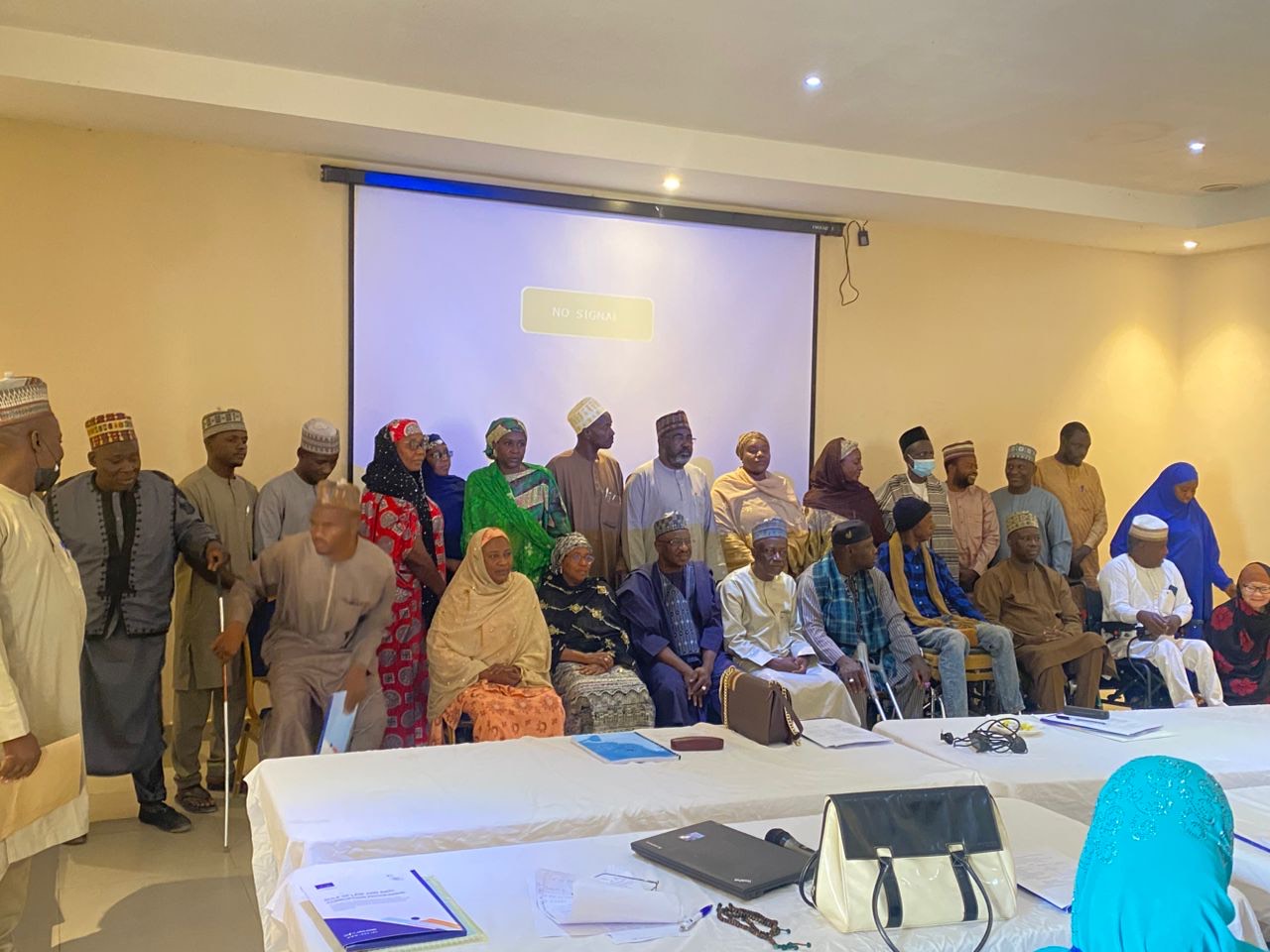
Kano State has hosted a major sensitisation workshop focused on enforcing accessibility regulations for persons with disabilities (PWDs).
The workshop, titled “Accessibility Regulation and Standard for PWDs in Public Spaces, Buildings, Transportation, and Other Facilities,” marks a significant step toward implementing the federal Disability Act of 2018 and transforming the state’s infrastructure.
The meeting, organised by the Ministry of Women Affairs, Children, and the Disabled, with support from the RoLAC II program implemented by International IDEA, brought together key stakeholders to address the persistent inaccessibility of public spaces.
Hajiya Amina S. Abdullahi, the Honourable Commissioner for the ministry, opened the session by declaring her commitment to equal opportunities for all.
“Accessibility is a fundamental right, and it is our collective responsibility to ensure that our public spaces, services, and facilities are usable by everyone,” Commissioner Abdullahi stated.
She acknowledged that while Nigeria has made progress on disability rights, many public buildings, transportation systems, and communication channels remain inaccessible.
She added, “This workshop aims to address these challenges and provide a platform for stakeholders to share best practices. Let us create a more inclusive society where everyone can participate and contribute.”
Binta Bala, the Director for Persons with Special Needs at the ministry, provided the technical framework, defining accessibility regulations as the laws and standards requiring that environments, products, and services, both physical and digital, be usable by people with disabilities.
She outlined the core objectives: to create accessible public infrastructure, provide equal access to information, promote inclusive education and employment, and foster a culture of inclusivity and respect.
The workshop highlighted the benefits of compliance, which extend beyond the disability community.
The Director stated that these benefits include increased social inclusion and participation of PWDs, the unlocking of improved economic opportunities and growth for the entire state, enhanced international recognition, and a better overall quality of life for all citizens.
Dr Bala said the gathering represents a crucial effort to move from policy to practice, ensuring that the provisions of the 2018 Disability Act are not merely words on paper but lead to tangible changes in the daily lives of persons with disabilities in Kano State.
