
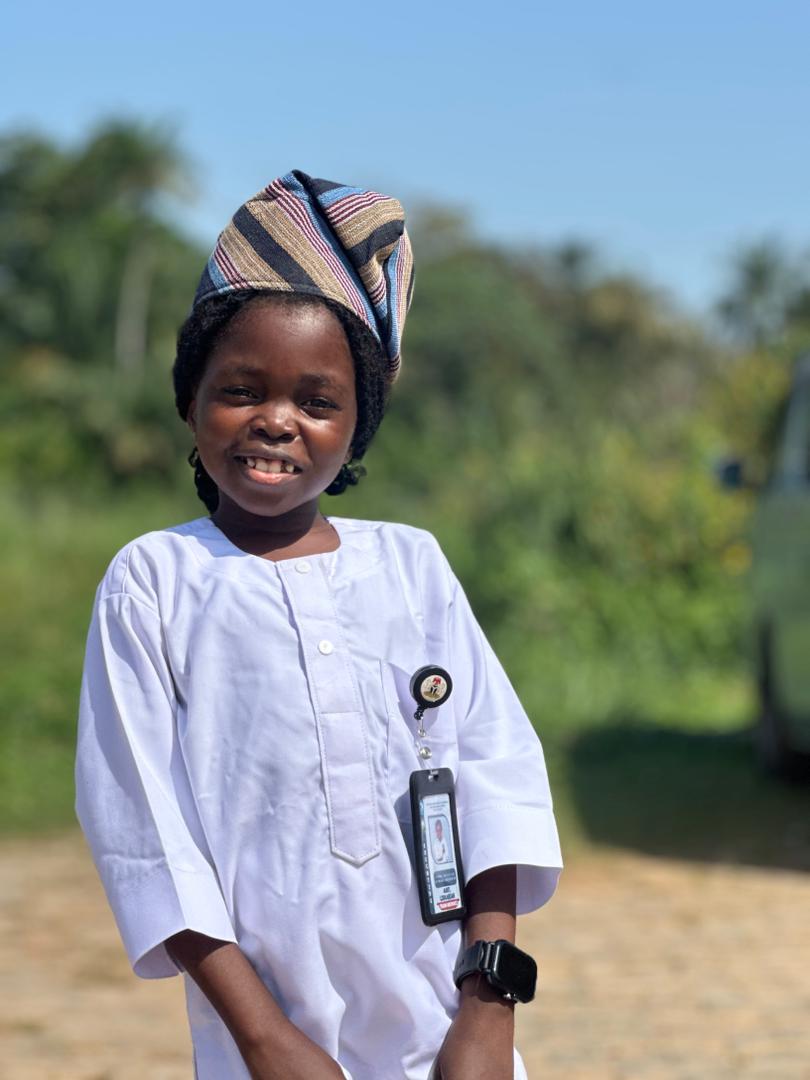
Despite the stares, assumptions, and social stigma often faced by people with dwarfism, Olajumoke Deborah Olatunji has refused to let society define her limits. The 200-level student of Federal University Oye-Ekiti opens up about her university experience, self-confidence, and the role her family has played in helping her thrive while advocating, through her story, for greater inclusion and understanding.
PWDSpotlight: Can you tell me a bit about yourself and your journey to university?
My name is Olatunji Jumoke Deborah, a 200-level student at the Federal University Oye Ekiti (FUOYE), studying Linguistics and Language.
I’m an English and Language educator, teaching people what they need to know about linguistics, how language works, how to use it better, and English improvement. Also, I’m a studentpreneur who sells student essentials like data, books, and pens in bulk and individually.
My journey to university has been an interesting and fulfilling one. Growing up, I always had a passion for teaching and acting, which led me to pursue a course that would allow me to explore these interests further.
My academic journey wasn’t always smooth; there were moments when I had to confront challenges, especially because of my condition. My determination to succeed, supported by the encouragement of my family, pushed me through.
When I got into university, I felt a sense of accomplishment and also that feeling that “you belong here,” but I also knew that this would be a new chapter where I would face unique challenges. Being a student with dwarfism, I was particularly focused on how inclusive the university environment would be, both in terms of physical infrastructure and the social climate. Fortunately, my experience so far has been a mixture of growth, learning, success, grace, achievements and some hurdles that I have learned to navigate.
PWDSpotlight: Looking back at your childhood, how would you describe your early school experiences in terms of inclusion and support?
Growing up, my early school experience was mostly in private schools, as I never attended a public school. Being in school as a child with my condition was not always easy, but it also wasn’t entirely bad.
There were times I felt included, especially when I had teachers and classmates who were kind and understanding. Some teachers really tried to make me feel like every other student. They encouraged me, carried me along in class activities, and made sure I didn’t feel left out. Those moments meant a lot to me because they made school feel like a safe and normal place.
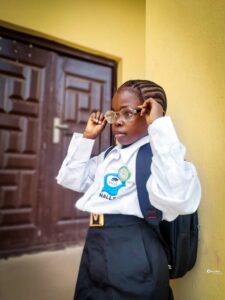
Sometimes, I couldn’t fully participate in certain activities, especially during inter-house sports, and that could be a bit painful.
One major thing that helped me through those years was my family. My family was always there for me. They kept encouraging me, speaking up for me when necessary, and reminding me that I was not less than anyone. They helped me build confidence and taught me how to carry myself, even when situations were not comfortable.
Looking back now, I would say my experience was a mix of both support and challenges. But those experiences helped shape me into who I am today. They made me stronger, more confident, and more aware of the importance of inclusion and understanding.
PWDSpotlight: Were there specific moments growing up that shaped your confidence or sense of identity as a person with dwarfism?
Yes, there were certain moments growing up that really shaped how I see myself and helped build my confidence.
One thing I remember clearly is how people used to look at me or react when they first saw me, especially whenever I stopped a bus on the road. At first, it made me feel uncomfortable and very aware of my difference. But over time, I got addicted to it and started understanding that people were mostly just curious. That realisation helped me stop seeing myself as “different in a bad way” and start accepting myself more.
Another thing that shaped me was how I gradually learned to speak up for myself. There were situations where I had to correct how people treated me. It wasn’t easy at first, but the more I did it, the more confident I became. I began to understand that my voice mattered and that I could help people understand me better.
Also, the support I got from my family played a big role. They constantly reminded me that I was capable and should never see myself as less than anyone. That stayed with me, especially during moments when I felt unsure of myself.
All these experiences, both the uncomfortable ones and the encouraging ones, helped me grow into someone who is more confident and self-aware. They taught me to accept who I am and not let my condition define my worth.
PWDSpotlight: How did your family, teachers, or peers contribute to (or challenge) your sense of belonging during your formative years?
My family played a very big role in making me feel like I truly belonged. From a young age, they never treated me like I was limited in any way. They always encouraged me to be confident, speak up, and go after anything I wanted.
My teachers were also very supportive. My mother was actually the headmistress of the primary school I attended, so I had that extra level of guidance and care. The teachers made sure I was carried along in class and treated me like every other student. I was also very active academically, and I used to represent my school in quiz competitions, which made me feel proud of myself and more accepted.
With my peers, it was a bit different at times. There were moments when I felt like I had to prove myself before being fully accepted.
Overall, I would say my family and teachers gave me a strong sense of belonging, while my experiences with peers helped me grow and become more confident in myself.
PWDSpotlight: What kinds of social barriers, if any, did you face growing up, and how did you navigate them?
Growing up, I faced a few social barriers, mostly because people didn’t really understand my condition. One of the main things was how people reacted to me, sometimes the staring, the whispering, or the way people would act differently around me. It could feel uncomfortable, especially when I was younger and didn’t fully understand how to handle it.
There were also situations where people assumed I couldn’t do certain things because of my size. That alone sometimes made me feel like I had to prove myself more than others.
But as time went on, I learned how to navigate all of that. I started building confidence in myself and focusing on what I could do rather than what people thought I couldn’t do.
Representing my school in quiz competitions also helped me a lot. It gave me a sense of pride and showed people that I was capable.
I also learned how to speak up for myself when necessary and not keep everything inside. Instead of feeling bad, I began to understand that most people just didn’t know better, and sometimes all it takes is patience and confidence.
Over time, these experiences helped me grow stronger. I became more comfortable with myself and less affected by how people see me.
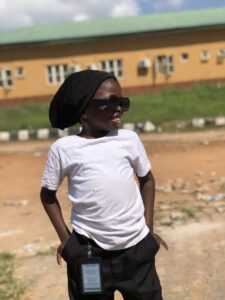
PWDSpotlight: Since entering university, how inclusive would you say your campus environment is for students with disabilities?
Since I entered university, I would say the campus is trying to be inclusive.
There are some good sides. For example, I’ve met lecturers and students who are kind, understanding, and willing to help when needed. That alone makes a big difference because it makes the environment feel more welcoming.
But when it comes to physical accessibility, there are still some challenges. Not all buildings are easy to move around in, and some spaces are not really designed with students with disabilities in mind. So, sometimes, I have to adjust or find my own way to manage certain situations.
Socially, it has been a mix. Some people are open and friendly, while others are a bit hesitant at first, maybe because they don’t know how to relate. But once they get to know me, things usually become normal.
PWDSpotlight: Have you experienced any challenges related to accessibility — whether physical, academic, or social — within your university?
Yes, I have faced some challenges, especially with moving around. There are times when getting to certain lecture halls or buildings is not very easy for me, so I just have to find a way to adjust and manage it.
Academically, it hasn’t really been a problem. I have been able to keep up with my work, and most of my lecturers are understanding, which makes things easier.
Socially, I would say it is just normal. Sometimes, people don’t really know how to approach me at first, so there can be a little space or awkwardness. But once we start talking, everything becomes fine and natural.
So overall, I’ve just learned to adjust and make things work for myself.
PWDSpotlight: What has been your experience with friendships, group work, and social life on campus? Could you remember cases of stigmatisation or marginalisation?
My experience with friendships and social life on campus has actually been okay. I’ve been able to make friends, and once people get to know me, everything just feels normal. I’m a very jovial person, so I like to laugh, gist, and relate freely with people, and I think that helps a lot.
For group work, I don’t really have issues. I always try to contribute my own part, and my group members usually carry me along. It hasn’t really been a problem for me.
Socially, I would say it’s just the beginning that can be a bit awkward sometimes. Some people don’t really know how to approach me at first, so they might keep their distance. But once we talk and get comfortable, that feeling goes away.
As for stigmatisation, I wouldn’t say it’s something I face all the time, but there have been some moments where I noticed people acting differently or making quiet assumptions. Nothing too direct, but you can still tell sometimes. I have just learned not to take it too seriously.
Overall, I just focus on being myself, and that has helped me build good relationships with people around me.
PWDSpotlight: How easy or difficult is it to socialise, particularly with the opposite sex, a person with dwarfism?
I would say it’s not always very easy, but it’s not impossible either.
Sometimes, when it comes to the opposite sex, there can be a bit of hesitation at the beginning. Some people don’t really know how to approach me, or they might be unsure of what to say. So, it can feel a little awkward at first.
But for me, I just try to be myself. As I said, I’m a jovial person, so I like to talk, laugh, and make people feel comfortable. Once that first tension is gone, everything becomes normal, and we can relate freely.
I’ve also learned not to overthink it. Instead of focusing on how people might see me, I just focus on being real and open.
That has helped me build normal friendships and conversations without stressing too much about it.
So yes, it can be a bit difficult at the beginning, but with time and the right energy, it becomes easier.
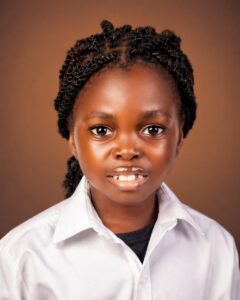
PWDSpotlight: What would you like to see, both in society and in universities, to improve inclusion and opportunities for people with dwarfism or people with disabilities generally?
Honestly, what I would really like to see is more understanding from people, both in society and in schools. I feel like many of the challenges people with disabilities face are not always because things are impossible, but because people don’t fully understand.
In everyday life, I would like people to be more open-minded. Instead of staring too much or making quick assumptions, it would be better if people just relate normally. People with dwarfism or any disability are just like every other person. We have goals, dreams, and things we want to achieve. So, being treated with respect and understanding really means a lot.
In universities, I think the environment can be made easier for everyone. For example, moving around should not be stressful. Classrooms, lecture halls, and other places should be easy to access without too much struggle. Even small changes can make a big difference in someone’s daily life.
I would also like to see more awareness. If students understand more about disabilities, it will reduce awkwardness and make interaction more natural. People will know how to relate better without feeling unsure or uncomfortable.
Another important thing is equal opportunity. People with disabilities should be given the same chance to participate in activities, academics, and other opportunities. Nobody should feel left out because of their condition.
For me personally, I just want a situation where I can move freely, learn comfortably, and relate with people without feeling different. I don’t want special treatment. All I just want is fairness, understanding, and a normal environment where I can be myself.
I believe that if there is more awareness and a little more effort from people, things can become better for everyone.
