

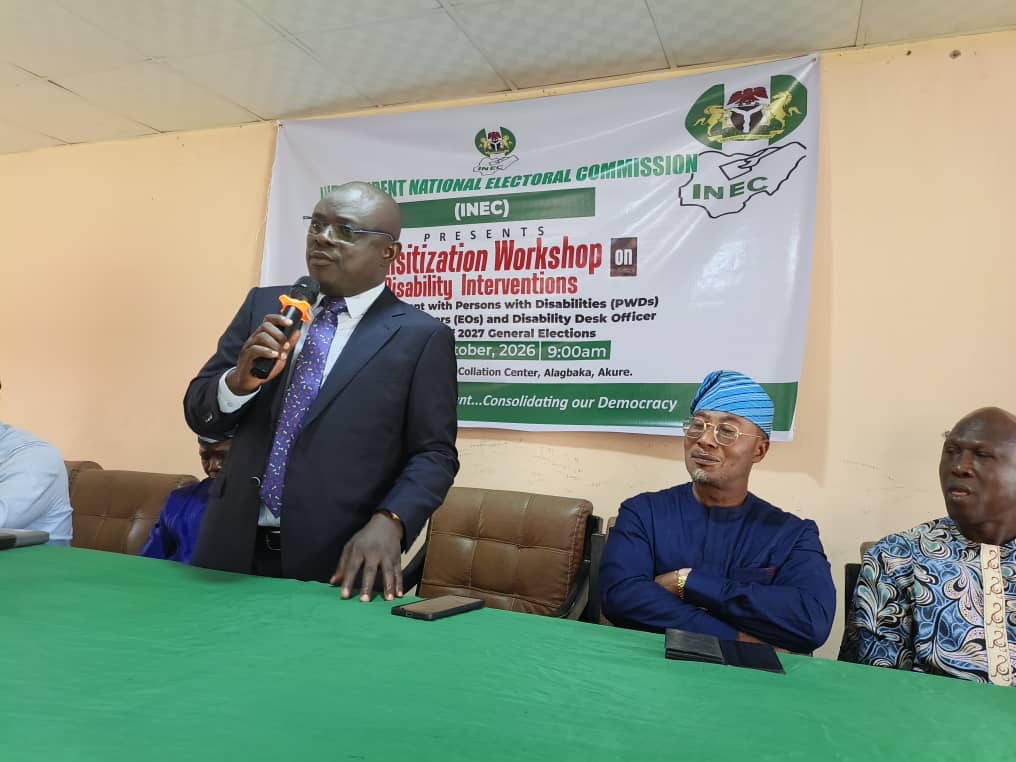
The Independent National Electoral Commission (INEC) in Ondo State has reaffirmed its commitment to inclusive elections, sensitising Persons with Disabilities (PWDs) on measures designed to improve accessibility and promote independent participation in the electoral process.
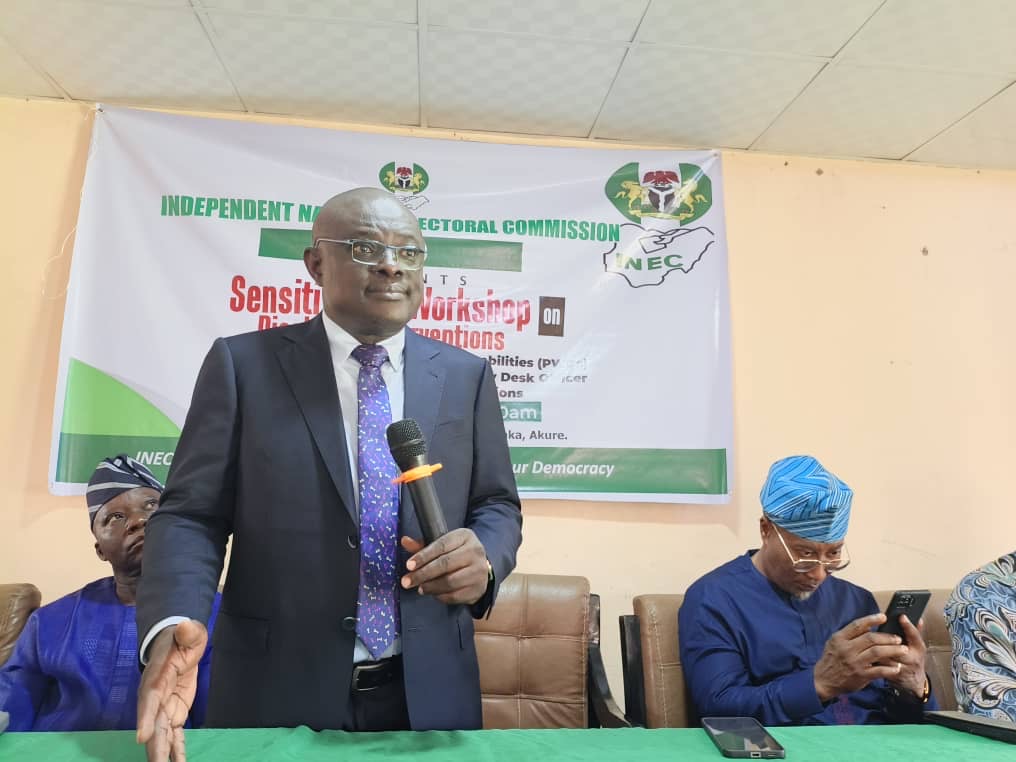
The Commission made this commitment during a one-day workshop on its disability interventions, which brought together representatives of various disability groups, including persons with visual and hearing impairments, persons with albinism and other disability communities.
Speaking at the workshop, the Resident Electoral Commissioner (REC) for Ondo State, Dr Mutiu Olaleke Agboke, highlighted INEC’s efforts to remove barriers that prevent persons with disabilities from participating fully in elections.
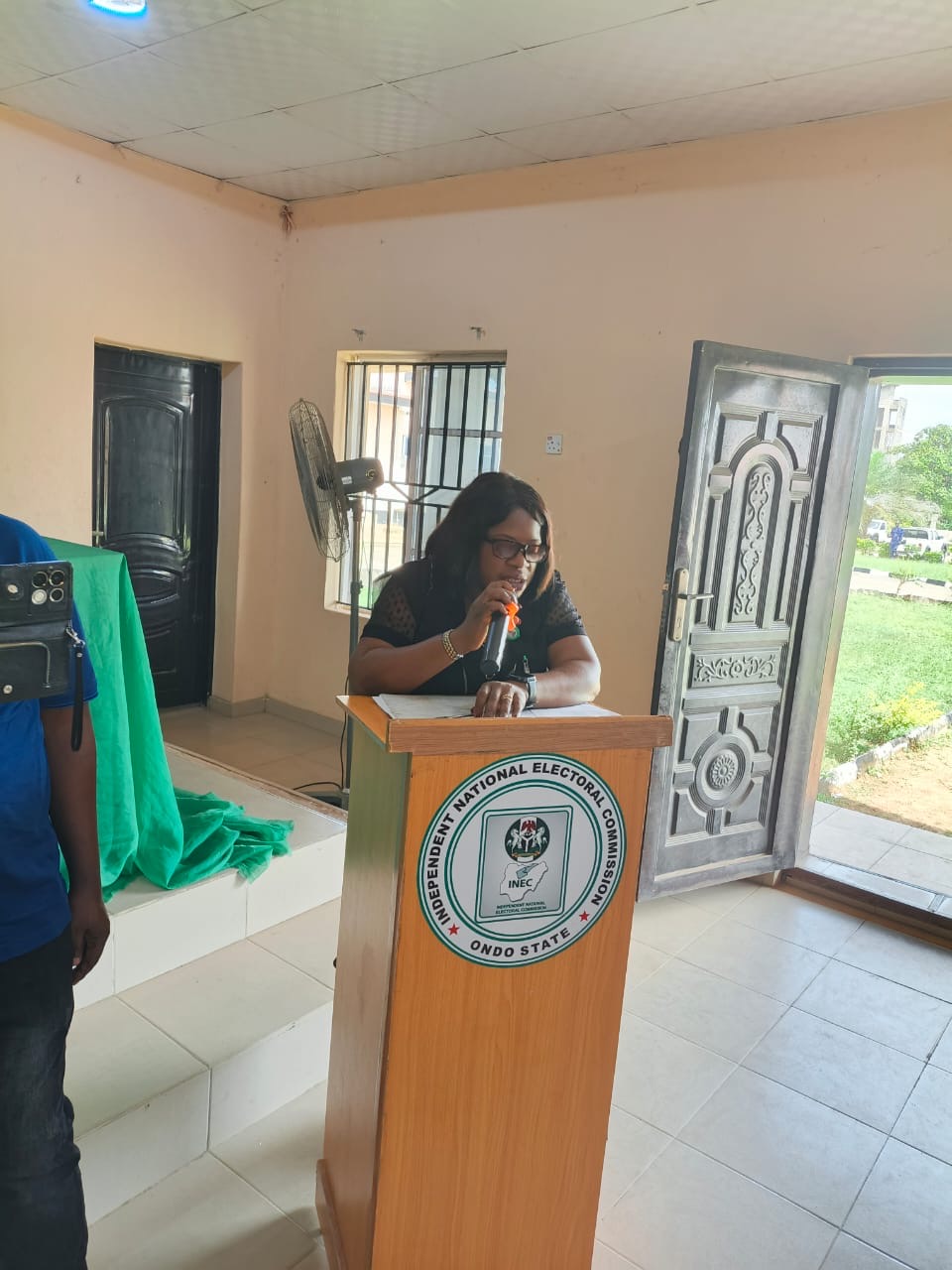
Agboke said the Commission had introduced measures to improve the accessibility of polling environments and provide assistive devices to enable voters with disabilities to cast their ballots independently while maintaining ballot secrecy.
He urged participants to share the knowledge gained at the workshop with members of their respective communities across the state to strengthen awareness of available electoral support mechanisms.
The REC also assured participants of adequate security arrangements to protect voters against intimidation. He added that applications from interested and qualified members of the disability community seeking appointment as ad hoc electoral staff for forthcoming elections would be duly considered.
In his response, the Ondo State Chairman of the Joint National Association of Persons with Disabilities (JONAPWD), Mr Abiodun Oluwasegun, commended INEC’s leadership for its interventions to facilitate voting for persons with disabilities.
Oluwasegun expressed optimism that the initiatives would encourage greater participation among PWDs and strengthen their confidence in the electoral process.
The technical sessions were facilitated by Mrs Awelewa Mojisola, representing the Director of INEC’s Gender and Inclusivity Department at the Commission’s headquarters.
During the sessions, participants were introduced to assistive devices intended to improve electoral access, including magnifying glasses, Braille ballot guides and posters designed to communicate election-related information to persons with hearing impairments.
The workshop also featured practical demonstrations to familiarise participants with the effective use of the devices during elections.
INEC reiterated its commitment to strengthening electoral inclusivity and ensuring that eligible voters are not disenfranchised because of disability.
The initiative highlights the importance of accessible voting arrangements, targeted voter education and the involvement of disability organisations in efforts to promote equal participation in Nigeria’s electoral process.
