
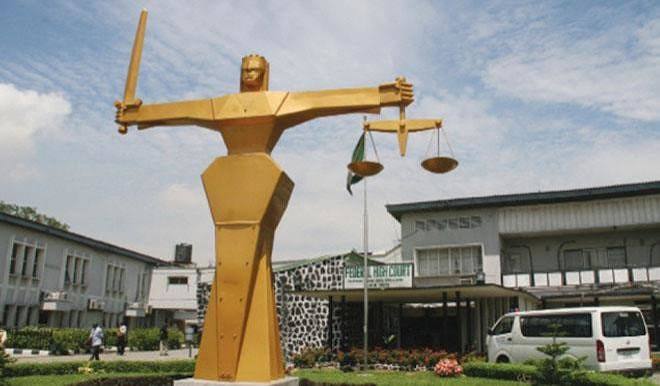
Inclusive News Network reports that the Federal High Court in Abuja is scheduled to hear on Thursday, November 5, 2026, a landmark lawsuit seeking ₦66 trillion in damages over alleged decades of systemic discrimination, exclusion and neglect of persons with disabilities and other vulnerable groups in Nigeria.
The suit, marked FHC/ABJ/CS/1824/2026, is expected to come before Justice Salim Olasupo Ibrahim at Courtroom 13, Fourth Floor, Federal High Court Complex, Abuja, at 9 a.m., according to a hearing notice dated October 27, 2026.
The applicants are seeking judicial intervention to address what they describe as 66 years of institutionalised exclusion and inadequate government action towards the rights, welfare, rehabilitation and inclusion of persons with disabilities and other vulnerable populations.
They are demanding ₦66 trillion in general, structural and punitive damages, calculated at ₦1 trillion for every year since Nigeria gained independence in 1960. The applicants argue that the claim represents compensation for decades of alleged systemic neglect and failure to adequately protect vulnerable populations.
According to the applicants, revised court pleadings have been submitted to the court and the respondents, including the Attorney-General of the Federation, outlining a range of proposed remedies and institutional reforms.
Among their major demands is the establishment of a Federal Ministry of Disability and an Institute for Rehabilitation Affairs. They are also seeking an independent monitoring mechanism to supervise the management and utilisation of any funds that may be awarded by the court.
The proposed monitoring mechanism would also participate in evaluating and screening candidates for ministerial and principal positions in the proposed ministry, with the applicants advocating for persons with disabilities to occupy leadership positions within the institution.
Beyond institutional reforms, the applicants are seeking nationwide accessibility improvements, expanded clinical rehabilitation services and the establishment of a grassroots village movement across Nigeria’s six geopolitical zones and 774 local government areas.
Their proposed intervention also includes a broad educational programme covering science, technology, engineering, mathematics, arts and culture (STEMAC), alongside training in artificial intelligence, blockchain technology, coding and robotics. The programme is envisioned to extend from kindergarten education to adult continuing education.
The lawsuit identifies eight broad categories of vulnerable populations for financial redress, rehabilitation and legal protection. These include children and young people; persons with physical, sensory, intellectual, neurodivergent and psychosocial disabilities; survivors of human trafficking and domestic violence; people living with complex trauma; internally displaced persons; wounded veterans; older citizens; and incarcerated persons.
The applicants are also anchoring their arguments on Nigeria’s domestic and international human rights obligations, particularly the United Nations Convention on the Rights of Persons with Disabilities (UNCRPD).
They maintain that they are acting as a civil society Independent Monitoring Mechanism under Articles 4.3 and 33.3 of the convention and have indicated plans to submit a compliance shadow report to the UN Committee on the Rights of Persons with Disabilities by December 13, 2026.
Other legal instruments cited in support of the case include the African Protocol on Disability, the 1999 Constitution of Nigeria and the Discrimination Against Persons with Disabilities (Prohibition) Act 2018.
The applicants have also referenced the United States case, In re NFL Players Concussion Injury Litigation, and the Supreme Court of Nigeria decision in Attorney-General of Kogi State v. Attorney-General of the Federation, as judicial authorities they intend to rely on in advancing their arguments.
In another development, the applicants disclosed that they had invited the United Nations Deputy Secretary-General, Dr Amina Mohammed, to participate in a proposed judicial mediation mechanism under relevant provisions of the disability rights convention.
The notice was jointly signed by Lady Omotunde Ellen Thompson, Co-founder and Life Chairperson of the Board of Trustees of the Joint National Association of Persons with Disabilities of Nigeria; Chief Eric Ndubueze Ufom, President and Chief Executive of Equal Rights for Persons with Disabilities International; and retired Brigadier-General Dr Lonsdale Oladeji Adeoye, President of the Foundation for the Support of Nigerian Veterans.
The applicants said the November 5 proceedings would provide an opportunity to present their revised demands and update the court on developments in the case.
