
BY: Mustapha Lawal
Nearly eight years after Nigeria signed the Discrimination Against Persons with Disabilities (Prohibition) Act into law, millions of persons with disabilities still navigate a country built largely without them in mind.
From inaccessible public buildings and transportation systems to exclusion from education, employment, governance, and social spaces, disability inclusion in Nigeria continues to exist more in policy documents than in everyday reality.
The truth is uncomfortable but necessary: Nigeria is failing persons with disabilities. While government officials frequently speak about inclusion and equal opportunities, the lived experiences of many Nigerians with disabilities tell a different story; one shaped by neglect, systemic barriers, and societal prejudice.
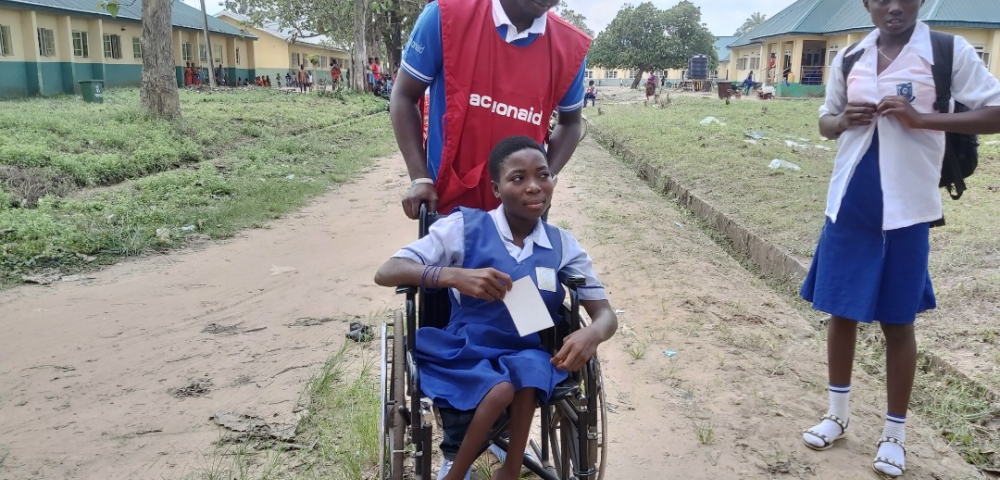
Across cities and rural communities alike, wheelchair users still encounter public buildings without ramps or elevators. Many schools remain inaccessible to students with physical, visual, or hearing impairments. Public information is rarely designed to accommodate persons with disabilities, while employment opportunities continue to shrink under the weight of discrimination and ableist assumptions.
For many Nigerians with disabilities, exclusion has become normalised. What makes the situation even more troubling is that these realities persist despite the existence of legal protections intended to guarantee inclusion and accessibility. The Disability Act was meant to signal a new national commitment to dignity, accessibility, and equal participation. Instead, implementation has remained painfully slow, weak, and inconsistent.
In many cases, accessibility compliance is treated as optional rather than mandatory. Government institutions that should lead by example often fail to meet the very standards established by law. This raises an important question: what is the value of progressive legislation when the people it was designed to protect continue to face the same barriers years later?
Part of the problem lies in how disability is still perceived within Nigerian society. Too often, persons with disabilities are viewed through the narrow lens of pity, charity, or dependency rather than rights, capability, and inclusion. Disability conversations frequently emerge during commemorative events or public sympathy campaigns, only to disappear from governance priorities afterward.
As a result, persons with disabilities are routinely treated as secondary considerations in national planning, infrastructure development, and policy implementation. Inclusion becomes reactive rather than intentional. Yet disability inclusion is not charity. It is not an act of kindness or public relations. It is a fundamental human rights issue tied directly to dignity, equality, and citizenship. A society cannot claim to be inclusive while millions of its citizens remain excluded from basic participation in public life.
Beyond physical infrastructure, the barriers confronting persons with disabilities are also social and psychological. Ableism, the belief that persons with disabilities are less capable or less valuable, continues to shape attitudes in workplaces, schools, religious spaces, and even within families.
Many persons with disabilities still have to prove their competence before they are considered worthy of opportunities routinely given to others. This constant struggle for recognition creates not only economic exclusion but also emotional exhaustion.
The consequences of exclusion are far-reaching. When public spaces remain inaccessible, persons with disabilities are denied mobility and independence. When schools are not inclusive, education becomes unequal. When employment systems exclude qualified candidates because of disability, poverty deepens. And when governance structures fail to include persons with disabilities in decision-making processes, policies continue to ignore their realities.
Exclusion is never accidental; it is oftentimes structural. Changing this reality will require more than inspirational speeches or symbolic appointments. Nigeria must move beyond performative inclusion toward deliberate implementation of disability rights laws. Accessibility standards should be enforced across public and private institutions. Disability inclusion must be integrated into national budgets, urban planning, education systems, healthcare delivery, digital communication, and employment policies.
Government agencies responsible for disability affairs must also be strengthened, funded adequately, and empowered to enforce compliance. But responsibility does not rest with the government alone. Society itself must confront the prejudices and assumptions that continue to isolate persons with disabilities. Inclusion begins with interaction, understanding, and the recognition that disability is a natural part of human diversity rather than a social abnormality.
Creating inclusive spaces where persons with and without disabilities can engage meaningfully is essential to dismantling fear, stereotypes, and social distance. The measure of an inclusive society is not how loudly it speaks about equality but how intentionally it removes barriers that prevent people from participating fully in everyday life.
For millions of Nigerians with disabilities, the demand is simple: not pity, not tokenism, but equal access, equal dignity, and equal opportunity. Until that becomes reality, Nigeria’s promise of inclusion will remain incomplete.
