
BY: Habeeb Adisa
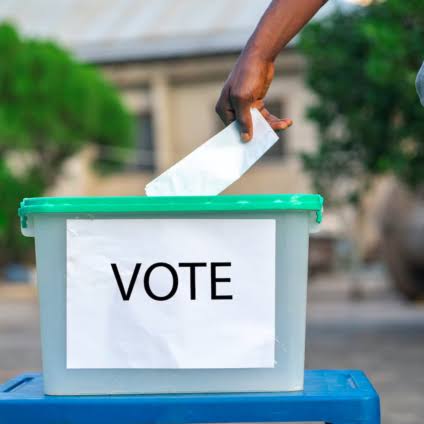
Persons with disabilities (PWDs) have joined thousands of other voters across Osun State to participate in Saturday’s governorship election, with reports from several polling units indicating that some voters with disabilities were given priority to cast their ballots.
At Polling Unit 03, Holy Trinity Primary School, Oke Ofa Ward, Ifelodun Local Government Area, electoral officials prioritised elderly voters and persons with disabilities when voting began at about 8:49 a.m.
A similar arrangement was reported at Polling Unit 011, Baptist Primary School, Iseki Oloro, Jagun Jagun Ward 03, in Ede South Local Government Area.
Also, an Election observer Akano Tope David, a person with disability (PWD), describes the election situation at Polling Unit 003, Ward 009, Atile, Irewole LGA as going on smoothly and calm.
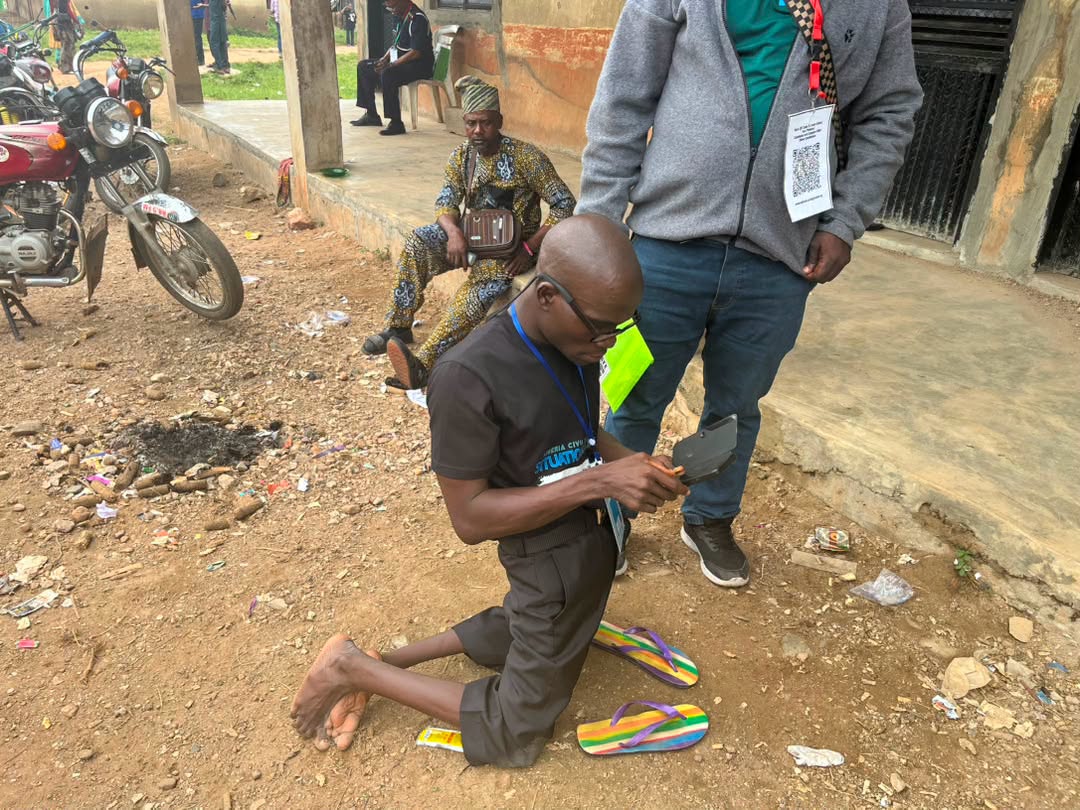
The development reflects one of the key accessibility measures expected during the election: priority voting for voters who may require additional time or assistance at polling units. The ICIR reported that an elderly voter living with a disability, Adebunmi Mashood, was among those who exercised his franchise.
But while priority voting is being observed in some locations, disability advocates say inclusion must go beyond simply allowing PWDs to vote.
Voting should be accessible to everyone
At Ilare III, Ward III, Unit 011, in Ife Central Local Government Area, wheelchair user Justina Obozokhai successfully cast her ballot and used the opportunity to call for better accessibility in Nigeria’s electoral process.
Obozokhai said she came out to vote because she understood the importance of civic participation and the role elections play in determining leadership.
She also called for greater recognition and opportunities for people with disabilities, stressing that their education, abilities and willingness to contribute to society should be valued.
Her experience was reported by Vanguard and separately by ThisDay, making her one of the clearest voices emerging from today’s election on the importance of disability inclusion.
The message from PWD voters is therefore two-sided: they want to participate, but they also want the process to be genuinely accessible.
From promises to polling-unit reality
Ahead of the election, the Independent National Electoral Commission (INEC) repeatedly assured PWDs that they would be able to participate in the election without discrimination.
INEC’s Osun Resident Electoral Commissioner, Oluwatoyin Babalola, had said PWDs have an equal right to vote freely and with dignity. The commission also highlighted measures including Braille ballot guides, magnifying glasses and visual aids for voters with hearing impairments.
INEC further said its ad hoc personnel would be trained on priority voting and that assistants accompanying PWD voters who require support would be allowed to help them during the voting process.
The Nigeria Civil Society Situation Room had identified priority voting and the availability of assistive materials for PWDs among the issues it would monitor during the Osun election.
PWDs are not just voters; they are also election observers
Disability inclusion in this election has also extended beyond the ballot box. In July, TAF Africa trained 150 persons with disabilities as election observers under its Able2Vote initiative, with support from the European Union Support to Democratic Governance in Nigeria programme.
According to TAF Africa, the observers were equipped to monitor accessibility and the voting experience of PWDs from polling locations across the state, including through the organisation’s Disability Hub App.
The organisation had also conducted voter education and civic sensitisation activities reaching more than 300 PWDs across six locations in Osun ahead of the election.
This means that PWDs are not only participating as voters; they are also helping to document whether the electoral process works for people with different disabilities.
The bigger question: Is access consistent?
Reports from today’s polling units suggest progress, particularly where PWDs and elderly voters have been prioritised. However, accessibility cannot be measured only by whether a PWD eventually casts a ballot.
For a genuinely inclusive election, voters with disabilities must be able to reach the polling unit, enter the voting area, receive information they can understand, use available assistive devices, vote independently or with permitted assistance, and leave the polling location with dignity and safety.
That is why the experiences being documented by PWD voters and disability-led observers across Osun will be important beyond today’s election. The election is also taking place amid reports of technical problems at some polling units. There are reports BVAS-related delays in parts of Irepodun, Olorunda and Ede Local Government Areas. While these problems are not specific to PWD voters, any delay or disruption can have additional consequences for voters who may face mobility, communication or support barriers.
What PWDSpotlight is watching?
As voting continues and in anticipation for results, PWDSpotlight will be watching for answers to some critical questions:
Were PWD voters given priority at polling units?
Were polling locations physically accessible to wheelchair users and people with mobility difficulties?
Were Braille ballot guides and other assistive devices actually available?
Were PWD voters allowed to use their preferred assistants where assistance was required?
Were voters with hearing, visual, intellectual or psychosocial disabilities able to access election information and procedures?
Did PWD voters experience intimidation, discrimination or unnecessary delays?
What did PWD election observers record across the state?
