

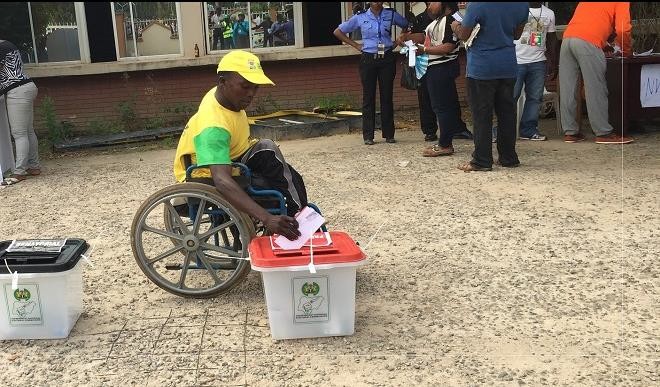
As the 2027 draws closer, and the electoral umpire concludes preparations for “free, fair and credible elections” as it promised, it is important to explore the representation and participation of persons with disabilities in the electoral process.
History has shown that PWDs are often overlooked in Nigeria’s elections, and their participation — as voters and candidates — has been extremely low despite reforms and promises of electoral inclusion.
In past elections, persons with disabilities struggle to participate in voting as polling units are rarely accessible to persons with physical impairments; and for persons with other forms of disabilities, such as virtual impairments, there are no assistive devices, such as braille ballot guides and magnifying glasses.
The community of special needs also rank extremely low in political participation as they neither occupy significant public offices nor win party tickets to contest elections.
On Electoral Participation
Of 103 million total registered voters by October, 2026, only 232,658 or 0.23 percent are persons with disabilities. It should be noted that the estimated population of Nigerians with disabilities is around 30 million.
Habeeb Hadisa, the Project Manager of PWDSpotlight describes the figure as “depressing”, noting that PWDs are not encouraged to vote despite their large population in Nigeria.
“Even though INEC promises an inclusive electoral process every election cycle, the commission does not walk the talk by carrying out extensive and deliberate voter education, especially one that targets PWDs. And many polling units are not easily accessible, so these people are not even usually prepared for,” Adisa explains.
PWDs and Political Participation in 2027 Elections
According to the latest figures released by the Independent Electoral Commission (INEC), there are 3,560 candidates contesting for federal electoral seats in the 2027 elections. That includes the Presidency, Senate and House of Representatives. Of all the 3,560 candidates, only seven are persons with disabilities.
The seven persons with disabilities contesting in the 2027 federal election are:
Asuquo Daniel Austin, a 51-year-old man with albinism contesting for the Uyo/Uruan/Nsit Atai/Ibesikpo Asutan federal constituency of Akwa Ibom state under the African Action Congress (AAC).
Okonkwo Ikechukwu Chibueze, a 39-year-old man, also with albinism, contesting for a HOR seat to represent Idemili North/Idemili South of Anambra state under the political party Action Alliance (AA).
Anakani Ejikeme Obinwanne is a visually impaired candidate of the Peoples Democratic Party (PDP) in Imo state. The 58-year-old man is contesting to represent Ahiazu Mbaise/Ezinihitte constituency in the House of Representatives.
Awesanmi Williams Ademola is a 57-year-old visually impaired candidate of the AAC in Lagos, contesting to represent the Ojo federal constituency.
Awal Abdulrahman is also a visually impaired candidate of the Nigeria Democratic Congress (NDC) contesting to represent Bida/Gbako/Katcha federal constituency of Niger State.
Efuwape Olufunmilayo Temidayo: a 50-year-old woman with albinism running for the Ikenne/Shagamu/Remo North federal constituency of Ogun state under the ruling All Progressive Congress (APC)
Muhammad Bashari is a 29-year-old man contesting under AA in the Gusau/Tsafe federal constituency of Zamfara state. His disability was not specified.
PWD Participation in State Elections
At the state level, there are 9,802 candidates contesting for House of Assembly seats across the 36 states of the federation in 2027. Of all the candidates, only 16 candidates are persons with disabilities — nine candidates with albinism and seven with undisclosed disabilities. The 16 candidates with albinism are:
Abdulhamid Ibbo A: a 33-year-old man contesting under the All Progressives Grand Alliance (APGA) in Adamawa state.
Musa Simon: a 39-year-old man also contesting under APGA in Adamawa.
Ezenweke Ifeanyi: a 54-year-old man, contesting under the Young Progressives Party (YPP) in Anambra state.
Osikanmi Tosin: a 34-year-old man also of the YPP, contesting for a seat in Ogun state.
Soloman Amusan: 58-year-old man contesting under the (SDP) in Ogun State.
Adeyemi Olaide: a 41-year-old man contesting under the APC in Oyo state.
Saidu Kabiru: a 36-year-old man contesting under the National Rescue Movement (NRM) in Sokoto State.
Aliyu Bello: a 44-year-old man also contesting under the NRM in Taraba State
Mohammed Baba Adamu: 36-year-old man contesting under the Labour Party (LP) in Yobe State.
The seven candidates with unspecified disabilities are Anyanso Destiny, of the Allied Peoples Movement (APM) in Abia, Awaji Queen, also of the APM in Benue, Ochere Gilbert of the YPP in Ebonyi, Aneke Stanley of the Labour Party in Enugu, Ihekwoaba Paul of the NDC in Imo, Babs-Olorunkemi Arafat Emiola of the ADC in Lagos, and Adikwu Augustine Ochigbo of the NDC, also in Lagos.
In the upcoming governorship elections, only one candidate across 28 states is a person with disabilities. He is Muhammed
Sani Abacha of the PDP, who identifies as Paraplegic/Crippled.
Therefore, across the country, there are only 23 candidates with a recorded disability.
State RECs Promise Inclusive Elections
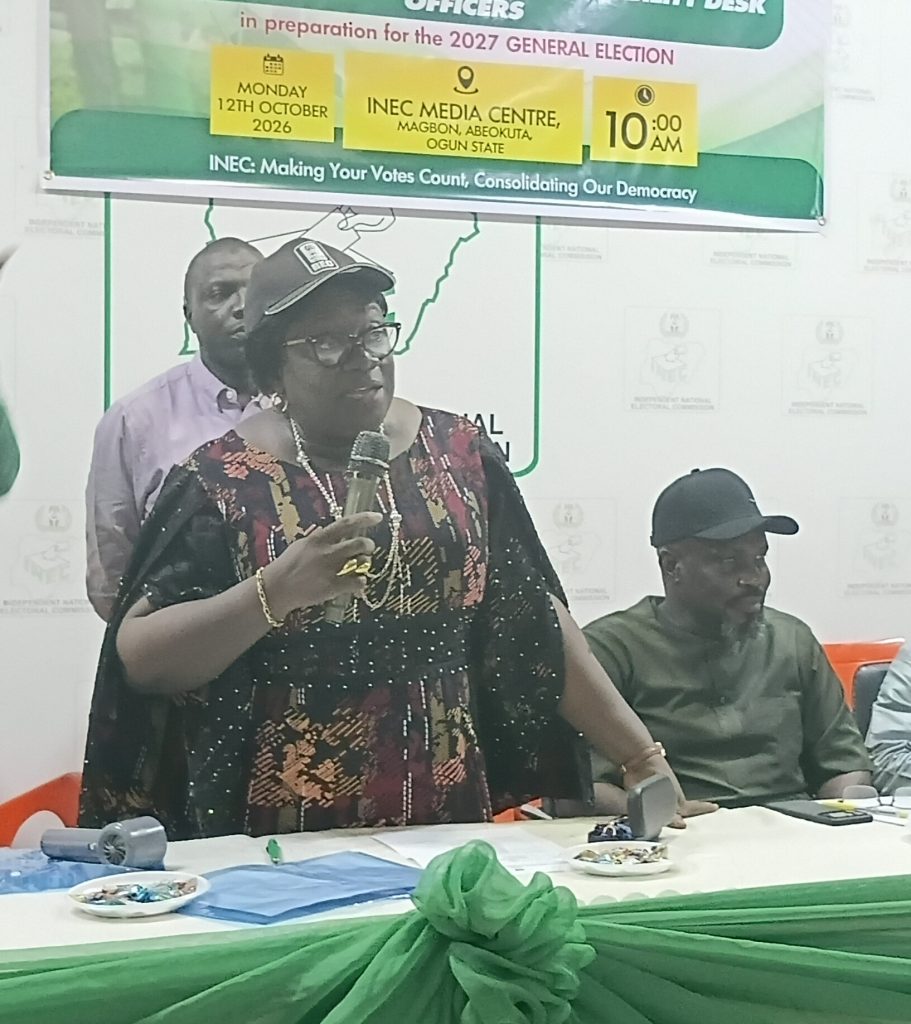
Meanwhile, Resident Electoral Commissioners of some states have promised to step up measures to make the 2027 general elections more accessible to PWDs, by providing assistive materials and improving polling-unit infrastructure.
INEC’s REC in Ogun State, Feyijimi Saseyi, made the promise in Abeokuta, at a sensitisation workshop for persons with disabilities and election officials on inclusive electoral practices.
Saseyi said the commission has provided Braille ballot guides for visually impaired voters and magnifying glasses for people with low vision, including persons with albinism. She added that some of the materials had been distributed to local government areas.
According to her, INEC has also trained election personnel to provide appropriate assistance to elderly voters, pregnant women and persons with disabilities. The Commission plans to install ramps at polling units to ease access for wheelchair users.
Also speaking at the workshop, Burka Makwada, an assistant director in the youth directorate at INEC’s headquarters in Abuja, said the Commission had produced EC30PWD posters containing illustrated voting instructions for voters with hearing impairments.
Makwada explained that EC40H forms are used to document specific disability categories, enabling INEC to determine the appropriate assistive materials required and improve their deployment during elections.
Also, the INEC REC in Ondo State, assured inclusivity and equal participation in the 2027 electoral process in the state.
He gave the assurance at a separate workshop on the Commission’s disability interventions for Persons with Disabilities (PWDs) in Akure, the state capital.
PWD Rep Speaks
Ayo Awobona, the chairman of the Joint National Association of Persons with Disabilities in Ogun State, urged INEC to provide temporary ramps at polling locations to facilitate movement for wheelchair users.
While speaking at the workshop organised by INEC in Ogun, Awobona called for comprehensive training for both permanent and ad hoc election personnel, arguing that staff need to understand the different needs of voters with disabilities and provide suitable assistance throughout the voting process.
Beyond voting access, he advocated waiving nomination-form fees for PWDs seeking elective office. He said financial barriers and persistent social prejudice continued to limit their participation in politics and governance.
