
ABUJA, Nigeria — Stakeholders at the 3rd Conference of Stakeholders on Disability Inclusion in Nigeria (COSDIN 3.0) have called for a fundamental shift in the country’s approach to disability inclusion, demanding greater representation of persons with disabilities in governance, policymaking, budgetary allocation and national development.
The conference, organised by the Joint National Association of Persons with Disabilities (JONAPWD), was held under the theme, “From Inclusion to Influence: Repositioning Persons with Disabilities for Leadership, Governance and National Development.
The conference held today, Tuesday, November 24, 2026, brought together disability advocates, policymakers, development partners and other stakeholders to examine how persons with disabilities can move beyond participation and representation to exercise meaningful influence in decisions affecting their lives.
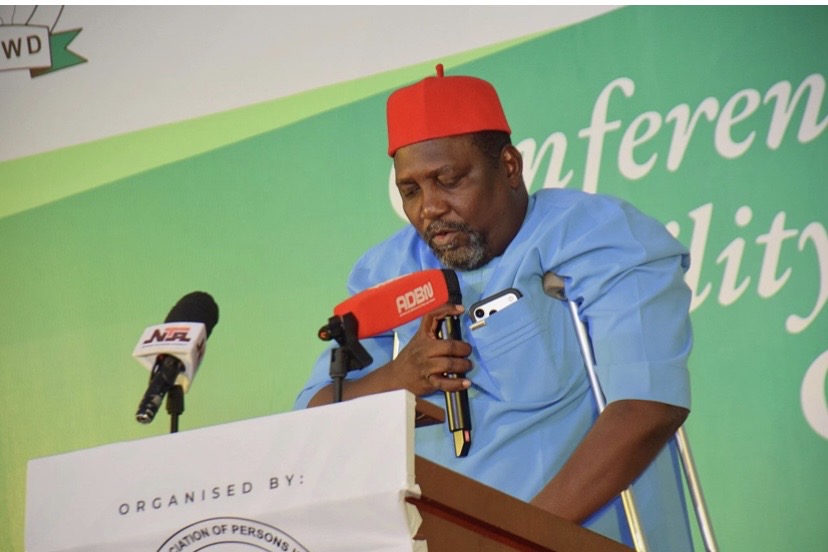
Speaking at the conference, JONAPWD National President, Abdullahi A. Usman, challenged the persistent exclusion of persons with disabilities from decision-making, resource allocation and representation processes.
Usman argued that disability inclusion must translate into meaningful representation, equitable budgetary prioritisation and recognition of the knowledge, expertise and agency of persons with disabilities.
Questioning the disparity in public resource allocation, he said: “You cannot tell me that the budget for all persons with disabilities in Nigeria is less than the budget of a state.”
He also expressed concern about the practice of allowing people without disabilities to represent persons with disabilities without adequately involving them in decisions concerning their interests.
“We are tired of other persons representing persons with disabilities,” he declared, adding: “I don’t want any person to represent me because my brain is working. He who wears the shoe knows where it pinches.”
His remarks reinforced the principle that persons with disabilities should not merely be consulted but must occupy positions where they can directly influence policies, investments and decisions affecting their communities.
Also addressing the conference, Mr Omar Alihashi, Head of the Political Team at the Canadian High Commission in Nigeria, reaffirmed the importance of recognising persons with disabilities as essential members of society whose contributions and perspectives are indispensable to national development.
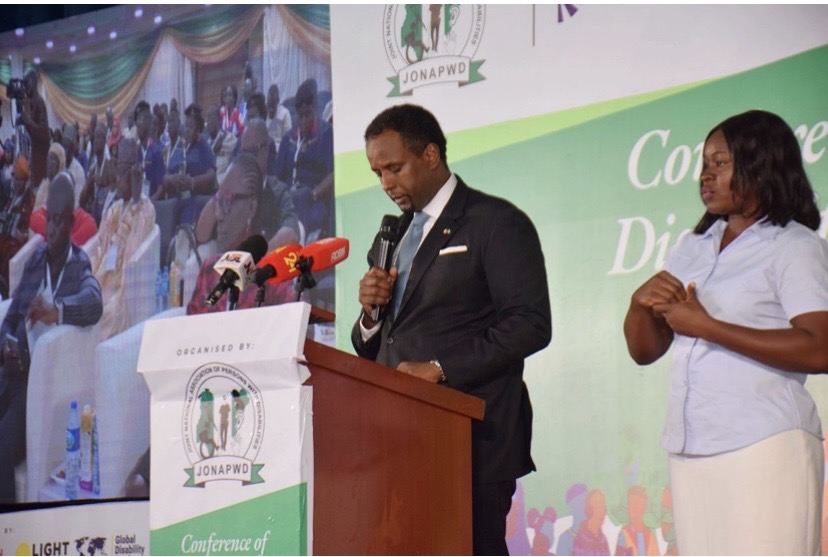
“Persons with Disabilities are key members of society,” Alihashi stated.
He emphasised that disability inclusion should not be treated merely as an act of charity or social responsibility but as an essential component of building an equitable society in which everyone has the opportunity to contribute, participate and thrive.
Another notable moment at the conference was a spoken-word performance by Sadiq Mohammad Sani, who delivered a powerful message challenging society to reconsider how it perceives persons with disabilities.
In his performance, Sani stressed that disability inclusion must go beyond sympathy, recognition and promises to become visible in the structures, policies, opportunities and decisions that shape society.
“We are not asking for charity. We are demanding our rightful seat at the table of nation-building,” he declared.
Urging society to recognise persons with disabilities beyond medical diagnoses, he called attention to their dignity, intellectual capacity, resilience, leadership and contributions to national development.
“See us, not through medical diagnosis. See us through human dignity. See us, not through what we seem like. See us, through the unstoppable power we possess,” he said.
He also celebrated disability advocates who continue to challenge exclusion and demand equal opportunities, describing persons with disabilities as thinkers, warriors, educators, dreamers and leaders.
The performance was accompanied by a sign language interpreter, reinforcing the importance of accessible communication and the participation of persons with different disabilities in public engagements.
COSDIN 3.0 builds on previous editions of the conference, which have sought to strengthen accountability and advance disability-inclusive development in Nigeria.
JONAPWD established the annual gathering as a platform for organisations of persons with disabilities, government institutions, legislators, development partners, private-sector actors and the media to develop coordinated responses to disability-related challenges.
The conference’s 2026 agenda is particularly significant as Nigeria approaches the 2027 general elections, with disability advocates increasingly demanding political representation and opportunities for persons with disabilities to participate in leadership and governance.
Beyond political participation, the broader disability inclusion agenda includes strengthening the implementation of the Discrimination Against Persons with Disabilities (Prohibition) Act, 2018, improving disability data collection, expanding accessible public services and ensuring that budgetary commitments translate into measurable improvements in people’s lives.
COSDIN 3.0 received support from the Disability Rights Fund, Light for the World and the Global Disability Fund.
As conversations around inclusive governance and sustainable development continue, the conference has renewed attention on a fundamental question: how can a society claim to be inclusive when the people most affected by disability-related policies remain insufficiently represented in the decisions that shape their lives?
