
Abuja, Nigeria — The Nigerian Communications Commission (NCC) has strengthened its commitment to digital inclusion with a N6 million grant awarded to three startups developing technology-driven solutions aimed at improving accessibility and opportunities for Persons with Disabilities (PWDs).
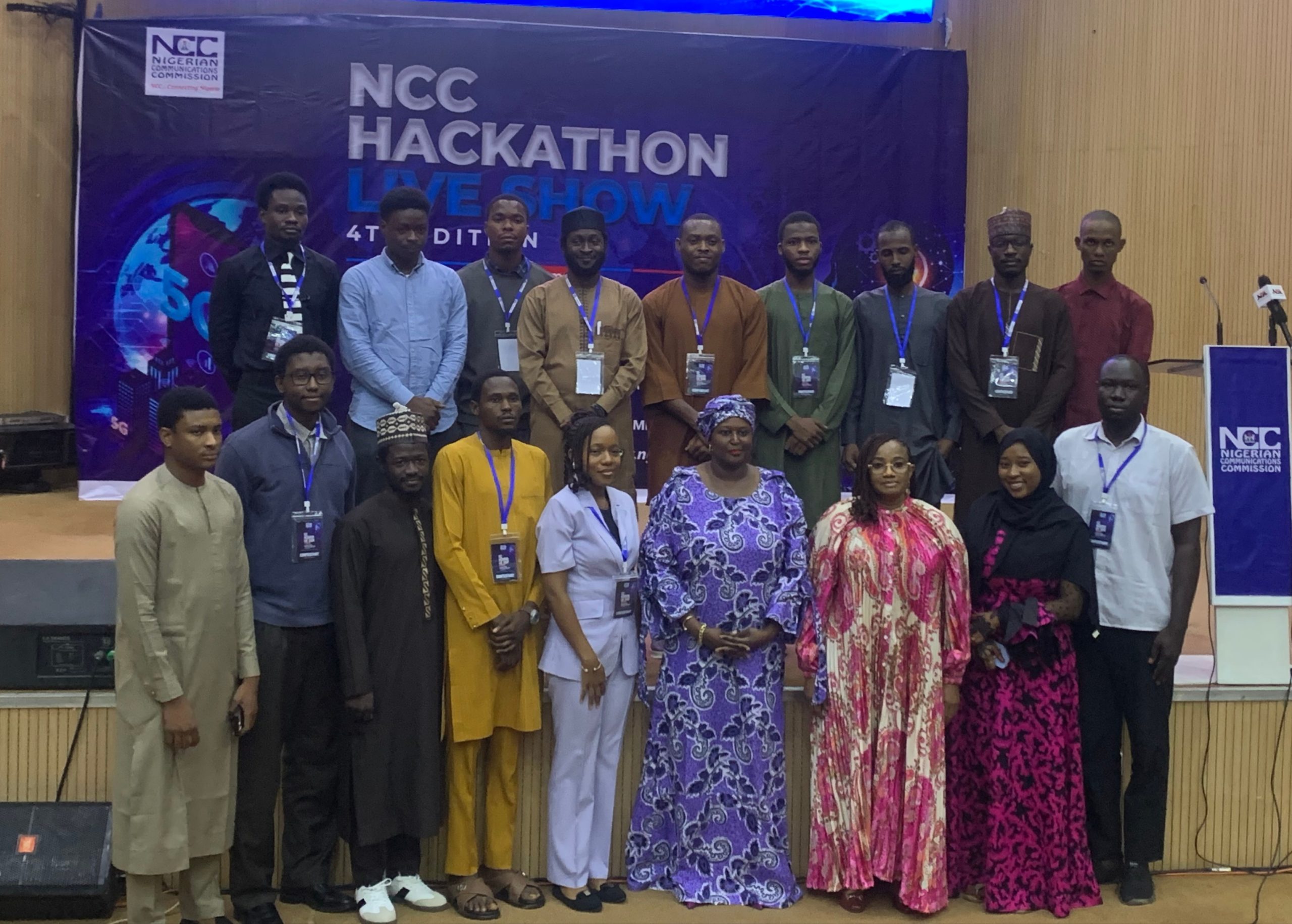
The grants were presented at the grand finale of the fourth edition of the NCC Hackathon Live Show 2026, held in Abuja under the theme “Technology Without Barriers.”
The initiative brought together young innovators to develop practical and affordable technologies capable of addressing some of the barriers that continue to limit the participation of PWDs and other underserved communities in Nigeria’s digital economy.
Speaking at the event, NCC Executive Vice Chairman, Dr Aminu Maida, said Nigeria’s digital transformation could not be considered successful if significant sections of the population remained excluded.
Represented by the Executive Commissioner, Stakeholder Management, Rimini Makama, Maida said innovation must be deployed to ensure that persons with disabilities can participate meaningfully in the country’s digital future.
Nigeria today stands at a pivotal crossroads to build a resilient and diversified digital economy; we must recognise that true national progress is impossible if some of our citizens remain locked out. This hackathon is our strategic response: a platform where innovation is harnessed to ensure that no one is left behind in our nation’s digital transformation journey. Often, several interconnected barriers continue to shape the digital experiences of persons with disabilities (PWDs), Maida said.
The NCC said these barriers affect access to education, healthcare, employment, financial services, communication and government platforms. The commission therefore challenged participants to develop solutions that were not only innovative, but also affordable, practical, scalable and responsive to Nigeria’s realities.
Earlier in the programme, the Director of the NCC’s Digital Economy Department, Hellen Obi, said the hackathon was designed to promote indigenous innovation and develop homegrown technologies for universal digital access.
The competition focused on areas including AI-powered speech-to-text technology, real-time sign-language translation, voice-based complaint systems, accessible customer-care services, USSD services, image-to-voice navigation and inclusive job-matching platforms.
The programme attracted 20 contestants, with five finalists advancing to the grand finale.
Sora Wins With Inclusive Employment Platform
At the end of the competition, Sora emerged as the overall winner, receiving N3 million. Clear Signal came second with N2 million, while Ikor placed third and received N1 million.
Sora’s winning solution is an inclusive job-matching and adaptive-skills platform designed specifically for verified persons with disabilities in Nigeria.
The platform aims to connect qualified PWDs with government agencies and employers that are committed to inclusive recruitment. It also provides learning opportunities adapted to different forms of disability.
For PWDs who continue to encounter inaccessible recruitment processes and limited employment opportunities, the platform addresses an important gap in the transition from skills development to meaningful employment.
Sora founder AbdulRazq Motolani Somoye said the idea was partly inspired by the Federal Government’s policy requiring government organisations to allocate at least five per cent of their workforce to persons with disabilities.
He noted that many conventional recruitment platforms were not sufficiently accessible or inclusive, creating the need for a platform specifically designed around the experiences and needs of PWDs.
The Sora team has also engaged with the Joint National Associations of Persons with Disabilities and is working towards a partnership to verify persons with disabilities, beginning in Abuja and eventually expanding nationwide.
Beyond a Hackathon
For the NCC, the initiative represents more than a technology competition.
Makama said the commission was committed to fostering innovation, promoting indigenous technological development and ensuring that Nigeria’s digital transformation was inclusive, accessible and beneficial to all Nigerians.
She noted that PWDs and other underserved populations continued to face interconnected barriers when accessing communication services, education, healthcare, financial services, employment and government platforms.
Addressing these challenges, she said, would require collaboration among government, academia, industry, startups, disability organisations and the wider innovation community.
The NCC also identified investment in young innovators as an investment in Nigeria’s future, stressing the importance of creativity, resilience and determination in building a successful technology ecosystem.
MTN Nigeria’s Senior Manager, Strategy and Innovation, Chinyelu Chikwendu, also commended the NCC for extending its support for innovation beyond its regulatory responsibilities.
She described the focus on persons with disabilities as particularly important and reaffirmed MTN’s commitment to supporting startups and innovators working towards a more inclusive digital ecosystem.
Obi further disclosed that the NCC would follow up with the Central Bank of Nigeria, the Federal Ministry of Innovation, Science and Technology, and MTN Nigeria, following expressions of interest from the organisations to collaborate in nurturing the participating innovators and developing their solutions.
What It Means for PWDs
The NCC Hackathon comes at a time when digital access is increasingly tied to participation in virtually every aspect of society.
For persons with disabilities, inaccessible technology can compound existing barriers, limiting access to jobs, education, financial services, healthcare and public information.
By supporting solutions developed around accessibility rather than treating it as an afterthought, initiatives such as the hackathon have the potential to shift the conversation from digital access as a privilege to digital accessibility as an essential part of inclusion.
The success of Sora also highlights the importance of involving PWDs in the development of technologies intended to serve them. A platform designed with disability-specific needs in mind can potentially address challenges that conventional digital services overlook.
However, the long-term impact of the initiative will depend on what happens after the competition — including funding, mentorship, partnerships, user testing, disability-community participation, regulatory support and the ability of the startups to scale their solutions beyond Abuja.
For PWDs across Nigeria, the real measure of success will ultimately be whether these innovations translate into more accessible services, greater employment opportunities and meaningful participation in the digital economy.
