
Only 47 per cent of about 30 government digital platforms assessed in a recent accessibility study met the required threshold for persons with disabilities, highlighting persistent barriers to equal participation as Nigeria moves more public services online.
The finding was disclosed by disability rights advocate, lawyer and researcher Tracy Onabis Agbamu during a presentation of the research findings to the National Information Technology Development Agency (NITDA).
The Centre for Inclusive Development (CID), which conducted the assessment, used the engagement to call for stronger accessibility standards and greater accountability in the design and delivery of digital services across Nigeria.
The findings come at a time when government agencies and private-sector organisations are increasingly shifting essential services to digital platforms, making accessibility a critical component of participation in public and economic life.
NITDA Signals Greater Attention to Accessibility
Responding to the findings, NITDA expressed readiness to strengthen its collaboration with CID to promote digital accessibility and ensure that persons with disabilities are not excluded from Nigeria’s digital transformation.
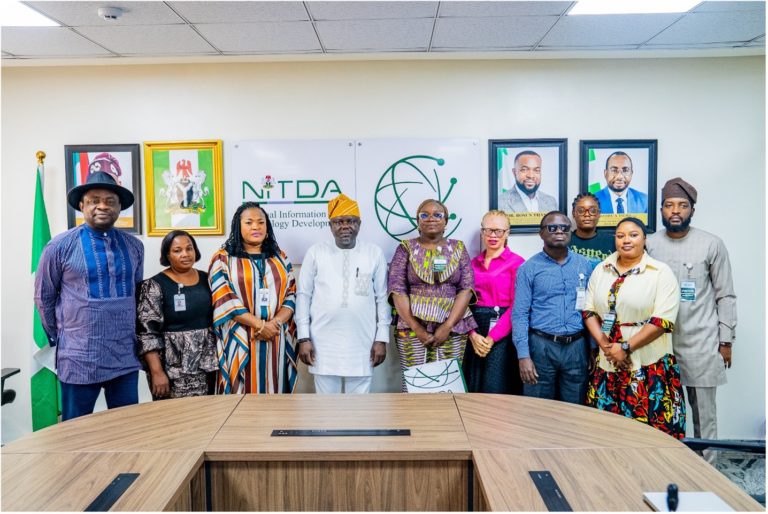
The commitment was made during a courtesy visit by CID to the agency, where the organisation presented the research findings and explored opportunities for strengthening accessibility standards across Nigeria’s digital ecosystem.
Representing NITDA’s Director-General, Dr Ayodeji Eniola, the agency’s Director of Corporate Planning and Strategy, Inuwa, said the findings were consistent with NITDA’s mandate of ensuring that no Nigerian is left behind in the country’s digital transformation.
Inuwa said NITDA’s digital literacy drive, which targets 70 per cent digital literacy nationwide by 2027, is being implemented across schools, the informal sector and the workforce.
He said the agency was particularly interested in ensuring that digital skills and access were extended to Nigerians irrespective of their status.
According to him, NITDA would be interested in working with CID to deepen ongoing efforts to ensure that digital skills are effectively cascaded to all Nigerians.
He also stressed the need for stronger measures to ensure that digital technologies serve every Nigerian.
NITDA Identifies Disability Inclusion Gaps
Inuwa disclosed that NITDA had already identified gaps relating to persons with disabilities within its digital literacy framework and had commenced efforts to address them.
He added that the development of national accessibility standards was among the issues the agency would seek to advance.
Accessibility considerations, he noted, have already been incorporated into NITDA’s revised website guidelines for government institutions.
The agency, he said, was willing to deepen its collaboration with CID, particularly in the areas of digital literacy and accessibility.
The position reflects a growing recognition that digital inclusion cannot be measured solely by the number of people who have access to digital devices, connectivity or digital-skills training.
For persons with disabilities, the accessibility of the platforms themselves can determine whether that access translates into meaningful participation.
NITDA Among Stronger Performers
Despite the overall findings, Agbamu identified NITDA among the platforms that performed strongly in the assessment.
She attributed the agency’s performance to its efforts towards advancing digital inclusion.
However, the broader findings revealed considerable accessibility challenges across private-sector platforms, particularly in the banking, fintech and payment sectors.
The concerns are significant because financial services are increasingly delivered through websites, mobile applications and other digital platforms.
Where these services are inaccessible, persons with disabilities may be unable to independently perform routine transactions, manage accounts or access financial information.
Inaccessible Banking Platforms Could Create Privacy Risks
Agbamu warned that inaccessible digital financial services could force persons with disabilities to depend on third parties to access essential services.
Such dependence, she noted, could expose users to privacy and security risks.
For example, a person who cannot independently navigate a banking application may have to rely on another individual to enter personal information, access an account or complete a transaction.
The issue therefore extends beyond convenience.
For disability advocates, inaccessible digital services can affect autonomy, privacy, financial independence and the ability of persons with disabilities to participate fully in an increasingly digital economy.
‘Digital Inclusion Goes Beyond Digital Skills’
Agbamu stressed that digital inclusion goes beyond equipping citizens with digital skills.
Digital platforms, she said, must also be designed to support assistive technologies and enable persons with disabilities to access services independently.
This distinction is particularly important as Nigeria expands digital literacy programmes.
Teaching a person how to use a digital service has limited impact if the service itself cannot be navigated using the assistive technology that person relies on.
Agbamu therefore called for accessibility to be incorporated into the development and regulation of digital services from the outset rather than treated as an afterthought.
Calls for Accessibility in Procurement and Licensing
To address the identified gaps, Agbamu called for NITDA’s intervention in developing guidance on accessibility statements for government websites.
She also urged the agency to integrate accessibility requirements into procurement and licensing frameworks.
Such requirements could help ensure that accessibility is considered when government institutions acquire or deploy digital technologies and when relevant digital services are licensed or regulated.
Agbamu further called for accessibility standards to be promoted across critical sectors.
She also sought NITDA’s technical support for the development and validation of a national digital accessibility standard for Nigeria.
What Happens When Services Move Online?
The discussion raises a broader question about Nigeria’s digital transformation: who is able to participate when essential services move online?
For millions of Nigerians, digital platforms increasingly provide gateways to government information, financial services, education, employment and other opportunities.
But if those platforms are inaccessible, the shift from physical to digital services can reproduce — or create new — barriers for persons with disabilities.
The CID findings therefore place accessibility at the centre of the digital transformation conversation.
The engagement between CID and NITDA also points to the importance of cooperation between government agencies, disability organisations, technology providers and other stakeholders in establishing practical accessibility standards.
