
Stakeholders working in disability inclusion and public accountability have questioned the adequacy of Nigeria’s ₦8.2 billion allocation for disability-related interventions in the 2026 national budget, arguing that the funding remains insufficient to address the needs of millions of persons with disabilities across the country.
The concerns were raised during an X Space organised by PWDSpotlight in collaboration with BOFIM and BO News on October 31, 2026, where journalists, disability inclusion specialists and public finance advocates examined the government’s budgetary commitments, the responsibilities of public institutions and the challenges of translating disability policies into practical interventions.
Opening the discussion, Habeeb Adisa, Project Manager at PWDSpotlight, said an analysis of the 2026 Appropriation Act by the organisation identified approximately ₦8.2 billion allocated to disability-related interventions. He noted that the conversation was particularly important as the country approaches another election cycle in 2027, when questions about government performance and accountability would become increasingly significant.
Blessing Oladunjoye of BOFIM and BO News argued that the allocation must be assessed against the wide range of services and interventions required to achieve disability inclusion. These include inclusive education, accessible healthcare, assistive devices, transportation, infrastructure and other essential support systems.
She maintained that the amount should not be considered sufficient simply because it represents a substantial figure on paper.
According to Oladunjoye, disability-related interventions should not be treated as acts of charity or occasional government assistance but as essential investments in the welfare and participation of citizens.
She also highlighted the additional costs persons with disabilities often incur in navigating everyday life, including transportation expenses and the need for personal assistance, which should inform government planning and budgetary decisions.
Dr Adebukola Adebayo, a disability-inclusive development specialist and Founder of Inclusive Development Consults Ltd., identified inadequate funding as one of the major obstacles preventing Nigeria from translating its disability policies into practical outcomes.
He observed that Nigeria has made progress in establishing legal and institutional frameworks, noting that the country has a national disability law while almost 30 of its 36 states have also enacted disability legislation.
However, he argued that the existence of policies does not automatically translate into improved living conditions without adequate budgetary provisions and effective implementation.
“The only vehicle to do that is the budget,” Adebayo said, emphasising that government spending remains central to implementing disability inclusion policies.
He recalled that an earlier study conducted around 2022 or 2023 indicated that less than ₦5 billion had been budgeted for persons with disabilities across the country, despite an estimated population exceeding 30 million.
Adebayo further distinguished between budgetary allocations and actual releases, noting that some disability agencies reportedly struggle to access even 10 to 30 per cent of their approved annual allocations.
He argued that such gaps undermine the capacity of institutions to provide essential services, including education, healthcare, assistive devices and social protection.
On the question of responsibility, the speakers agreed that disability inclusion should not be restricted to the mandates of disability commissions or specialised government agencies.
Oladunjoye explained that disability is a cross-cutting issue requiring every ministry and government institution to integrate accessibility into its operations.
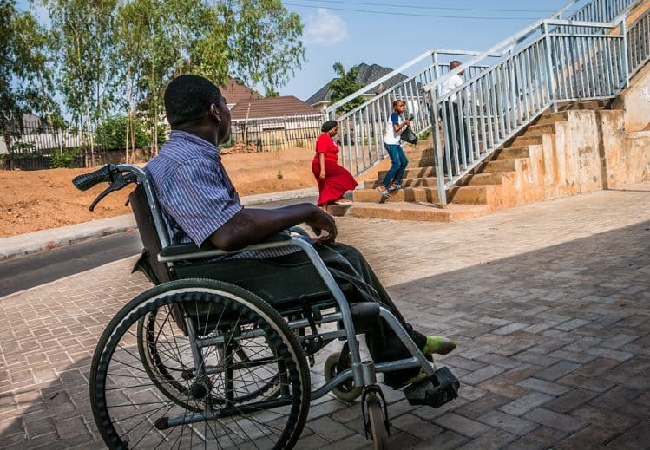
For instance, she argued that accessibility should be considered during road construction rather than left for disability agencies to address after infrastructure has been completed. Similarly, existing schools should be designed and adapted to accommodate students with disabilities instead of treating inclusive education as an entirely separate responsibility.
Adebayo supported this position, proposing that ministries, departments and agencies should have designated disability desk officers or units responsible for ensuring that disability concerns are incorporated into their programmes.
He described disability inclusion as an economic development issue rather than merely a social welfare concern, arguing that investments in accessible infrastructure, assistive technology and inclusive services could create economic opportunities.
While acknowledging the complementary roles of the private sector, development partners and civil society organisations, he maintained that government must take primary responsibility for funding and implementing disability inclusion.
The discussion also highlighted the need to involve persons with disabilities in identifying their actual needs before government allocations are made.
Adebayo expressed concern about the disconnect between government disability agencies and Organisations of Persons with Disabilities (OPDs), arguing that insufficient consultation often results in budgets that do not reflect the priorities of intended beneficiaries.
He called for stronger collaboration between disability commissions and OPDs at national and state levels, particularly during budget consultations.
Oladunjoye also urged government institutions to move beyond making nominal allocations and ensure that funding addresses practical challenges affecting persons with disabilities.
As Nigeria approaches the 2027 general elections, the speakers called for increased scrutiny of disability-related budget commitments, insisting that government performance should be assessed not only by the policies it announces but by the resources released and the outcomes delivered.
The discussion was organised as part of PWDSpotlight’s continuing engagement on issues affecting persons with disabilities, bringing together stakeholders to examine how public policies and financial commitments can translate into meaningful inclusion.
