

For many Persons with Disabilities (PWDs), participation in the digital economy is not simply a question of having access to a smartphone or an internet connection. It also depends on having the knowledge, confidence and skills to use digital platforms safely, responsibly and effectively.
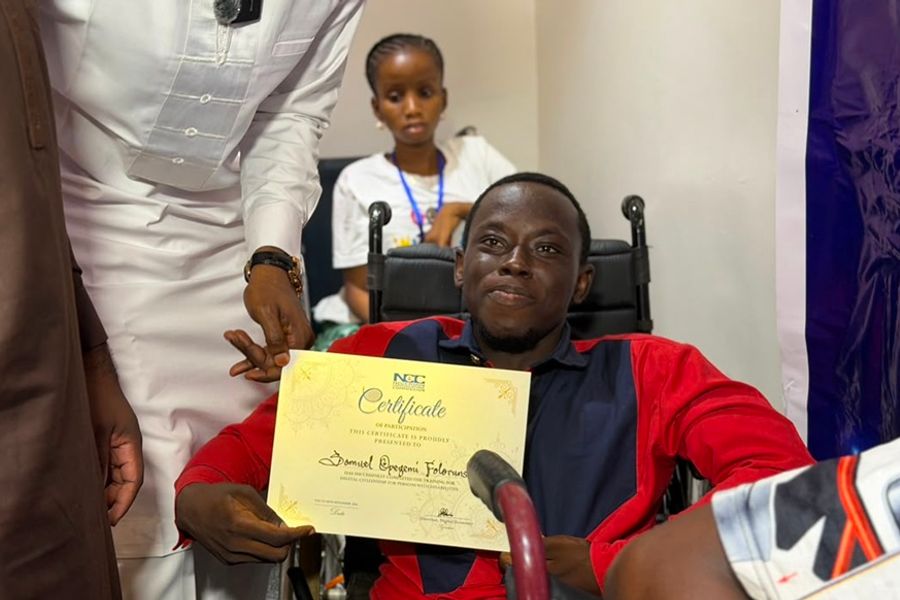
It was against this backdrop that the Lagos State Office for Disability Affairs (LASODA), in collaboration with the Nigerian Communications Commission (NCC), trained 100 Persons with Disabilities in digital citizenship skills as part of efforts to strengthen digital inclusion and expand access to opportunities in the digital economy.
The two-day training, held from September 9 to 10, 2026, at The Cordis Hotel, Ashabi Cole Street, off Agidingbi Road, Alausa, Ikeja, brought together PWDs from across Lagos State. The programme focused on practical knowledge for navigating the digital environment, participating responsibly online and making effective use of digital platforms.
For participants, the training represented more than an opportunity to acquire another certificate. It was an intervention aimed at strengthening their ability to engage with an increasingly digital society where access to information, employment, entrepreneurship, education and social interaction is becoming closely connected to digital competence.

Speaking at the opening ceremony, the Head of the Department of Monitoring, Evaluation and Orientation at LASODA, Dr. Funmi Adekola, who represented the General Manager, Mrs. Adenike Oyetunde-Lawal, commended the NCC for deliberately including Persons with Disabilities in its digital empowerment initiatives.
Adekola noted that intentional inclusion was particularly important as technology continues to reshape social and economic activities. She said the collaboration demonstrated the importance of ensuring that PWDs are not excluded from opportunities emerging from the digital transformation.
We particularly commend the Nigerian Communications Commission for engaging stakeholders and ensuring that Persons with Disabilities are deliberately included in its digital empowerment agenda, she said.
Her remarks highlight a critical issue in the disability inclusion conversation: digital inclusion must go beyond connectivity to meaningful participation. While access to devices and internet services remains important, persons with disabilities also need the skills and confidence to use digital tools in ways that improve their independence and economic prospects.

The training also explored the potential of digital skills to support employment and entrepreneurship. For PWDs who continue to encounter barriers within traditional workplaces and business environments, digital platforms can create alternative pathways for earning a livelihood, developing businesses, accessing information and connecting with wider markets.
READ MORE: Abia PWDs Protest Exclusion from Teacher Recruitment as Disability Commission Promises Justice
However, those opportunities can only become meaningful when digital spaces are accessible, safe and inclusive. This makes initiatives that combine digital literacy with disability inclusion particularly significant.

LASODA also acknowledged Fornido Development Limited, which coordinated and delivered the training, expressing optimism that the knowledge acquired would translate into tangible opportunities for the participants.
At the end of the programme, the 100 participants received certificates recognising their successful completion of the training.
