
As preparations intensify for the 2026 Osun State governorship election, the need for accurate and accessible election information has taken on added importance for persons with disabilities, with the Joint National Association of Persons with Disabilities (JONAPWD) among stakeholders represented at a media training focused on tackling misinformation and disinformation.
FactCheckAfrica, with support from the International Fact-Checking Network (IFCN) Sustainability Grant, trained 70 newsroom editors, journalists, bloggers and other information producers at a one-day election information integrity workshop held on Saturday, August 8, 2026, at Osogbo Holiday Inn Hotel & Suites Ltd., Dada Estate, Osogbo.
The workshop, themed “Preparing Osun Citizens and Information Stakeholders: Gathering 70 Newsroom Editors, Journalists, Bloggers and Other Information Producers Ahead of the 2026 Governorship Election,” brought together representatives of broadcast, print and digital media organisations, alongside key stakeholder groups including JONAPWD, the Nigeria Union of Journalists (NUJ), National Association of Women Journalists (NAWOJ) and the National Orientation Agency (NOA).
For persons with disabilities, the accuracy and accessibility of election information can directly affect their ability to participate meaningfully in the electoral process. Misleading information about voting procedures, polling locations, voter eligibility or the rights of persons with disabilities can create additional barriers for a community that already faces challenges accessing political and civic information.
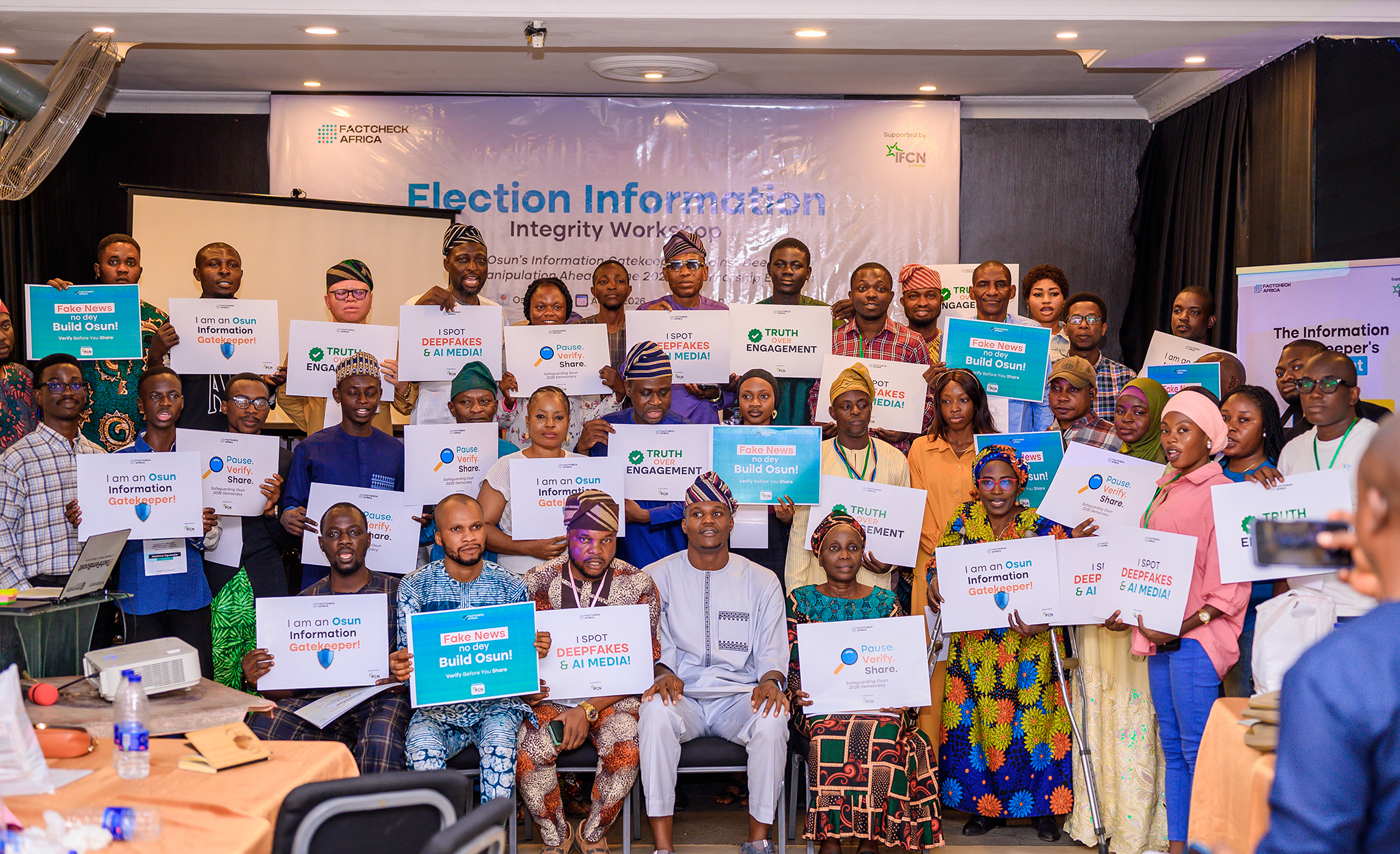
The presence of JONAPWD at the workshop therefore provided an important disability inclusion dimension to conversations around election information integrity.
Why Election Information Matters to PWDs
Persons with disabilities are not only consumers of election information but also voters, political participants, community leaders, advocates and information producers. As political conversations increasingly take place online, misinformation can have serious consequences for voters with disabilities. False claims about electoral procedures can discourage participation, while inaccessible or poorly communicated information can leave some voters unable to make informed decisions.
The challenge is therefore twofold: ensuring that election information is accurate and verified, while also making sure that the information is accessible and inclusive.
This places an important responsibility on journalists, editors, bloggers and other information producers to consider disability in their election reporting and to avoid narratives that reinforce stereotypes or misrepresent the experiences and rights of persons with disabilities.
The workshop featured expert-led sessions on election misinformation and disinformation, fact-checking, source verification, responsible information sharing, artificial intelligence, deepfakes and synthetic media.
Dr Rasheed Adebiyi, Associate Professor in the Department of Mass Communication at Fountain University, Osogbo, examined the nature of information disorder and its implications for electoral integrity.
He explained the distinctions between misinformation, disinformation and malinformation, noting that false or harmful information can undermine public trust, suppress voter participation and heighten tension during elections.
Adebiyi encouraged journalists to develop a strong verification culture by examining evidence, validating claims and considering the public interest before publishing information.
Mustapha Lawal of FactCheckAfrica subsequently trained participants on practical fact-checking and verification techniques, including source evaluation, claim assessment, reverse image searches and geolocation.
He demonstrated tools such as InVID, Google Lens, TinEye and Yandex and urged information producers to “think and verify before sharing information.”
For disability-focused organisations and advocates, such verification skills are particularly relevant in an environment where false information about disability rights, electoral accessibility and the participation of persons with disabilities can spread quickly through social media.
The workshop also examined the growing use of artificial intelligence in creating manipulated images, videos and audio.
Israel Olatunji Tijani, founder of ChatVE and a data scientist, introduced participants to AI-generated content, deepfakes and synthetic media, highlighting the increasing difficulty of distinguishing authentic material from fabricated content.
Participants were taken through practical exercises to identify potentially manipulated content, including indicators such as anatomical inconsistencies, implausible physical movements, problems with shadows and reflections, and socio-cultural inconsistencies.
The growing sophistication of AI-generated content raises concerns for all voters, including persons with disabilities, particularly where manipulated content could be used to spread false claims about candidates, communities or disability-related issues.
Towards More Inclusive Election Reporting
The participation of JONAPWD also reinforces the need for disability perspectives to be incorporated into election information initiatives.
Accurate reporting is essential, but inclusive reporting requires journalists and other information producers to go further by considering whether election information reaches people with different disabilities and whether persons with disabilities are adequately represented in election coverage.
This includes paying attention to accessible communication, using respectful and accurate language when reporting on disability, and ensuring that stories about elections reflect persons with disabilities as active citizens rather than simply as beneficiaries or vulnerable groups.
As Osun approaches its 2026 governorship election, stronger collaboration between fact-checkers, media organisations and disability-focused organisations could help ensure that accurate election information reaches a broader section of the electorate.
